PCB Surface Finishes
The surface finish of a printed circuit board serves as protection against oxidation of the underlying copper and improves solderability and shelf life.
The choice of surface finish depends on the product type, application, and required reliability level.
Surface finishes vary in terms of storage stability, soldering performance, and cost.
The most common finishes include Hot Air Solder Leveling (HAL), Tin/Lead Coating, and Electroless Nickel Immersion Gold (ENIG).
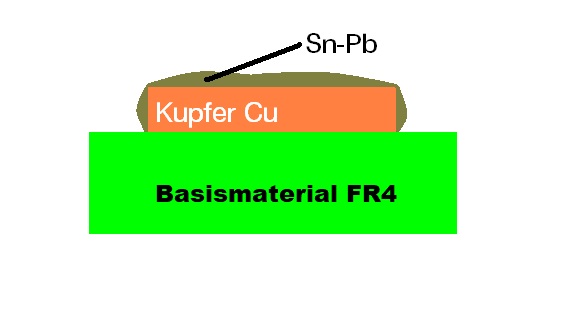
1. Cu–Sn/Pb Reflow Coating
This traditional tin–lead surface coating provides excellent solderability and reliable performance in various environments.
- Typical layer thickness: 1–20 µm (up to 50 µm possible)
Advantages:
- Very good soldering characteristics
- Lower process temperatures
- Good storage stability (up to 12 months)
Disadvantages:
- Not RoHS-compliant
- Limited suitability for fine-pitch components
- Non-planar pad surface
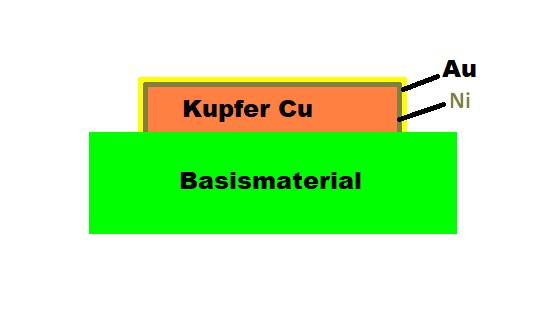
2. ENIG – Electroless Nickel Immersion Gold (RoHS Compliant)
The ENIG finish provides an extremely flat, oxidation-resistant surface ideal for fine-pitch and SMD applications.
It consists of a nickel layer protecting the copper, followed by a thin gold layer for optimal solderability.
Advantages:
- Excellent surface planarity
- Ideal for fine-pitch and SMD components
- Very good solderability and oxidation resistance
- Long shelf life (up to 12 months)
- No copper contamination in solder baths due to nickel barrier
Disadvantages:
- Higher process cost
- High process temperature (~90°C for 20 minutes during nickel deposition)
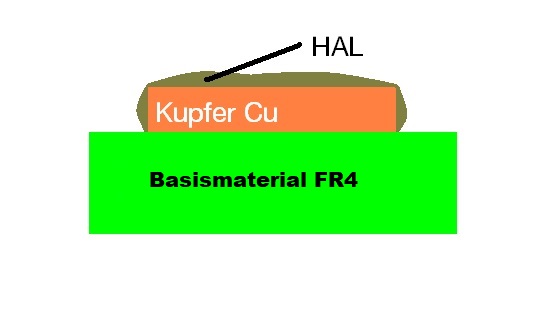
3. HAL – Hot Air Leveling (RoHS Compliant)
In the HAL process, the board is dipped in molten solder and leveled by hot air knives, leaving an even layer of solder on the pads.
- Typical layer thickness: 1–20 µm (occasionally up to 50 µm)
Advantages:
- Good solderability and wetting behavior
- Excellent reflow properties
- Good storage stability (up to 12 months)
Disadvantages:
- Limited suitability for fine-pitch components
- Reduced surface planarity compared to ENIG
The choice of surface finish directly impacts solderability, process reliability, and storage life. ProfiAnts provides all standard finishes according to IPC specifications, ensuring the best possible balance between cost, performance, and durability.